Blog
Thoughts and insights on building conversation-native AI
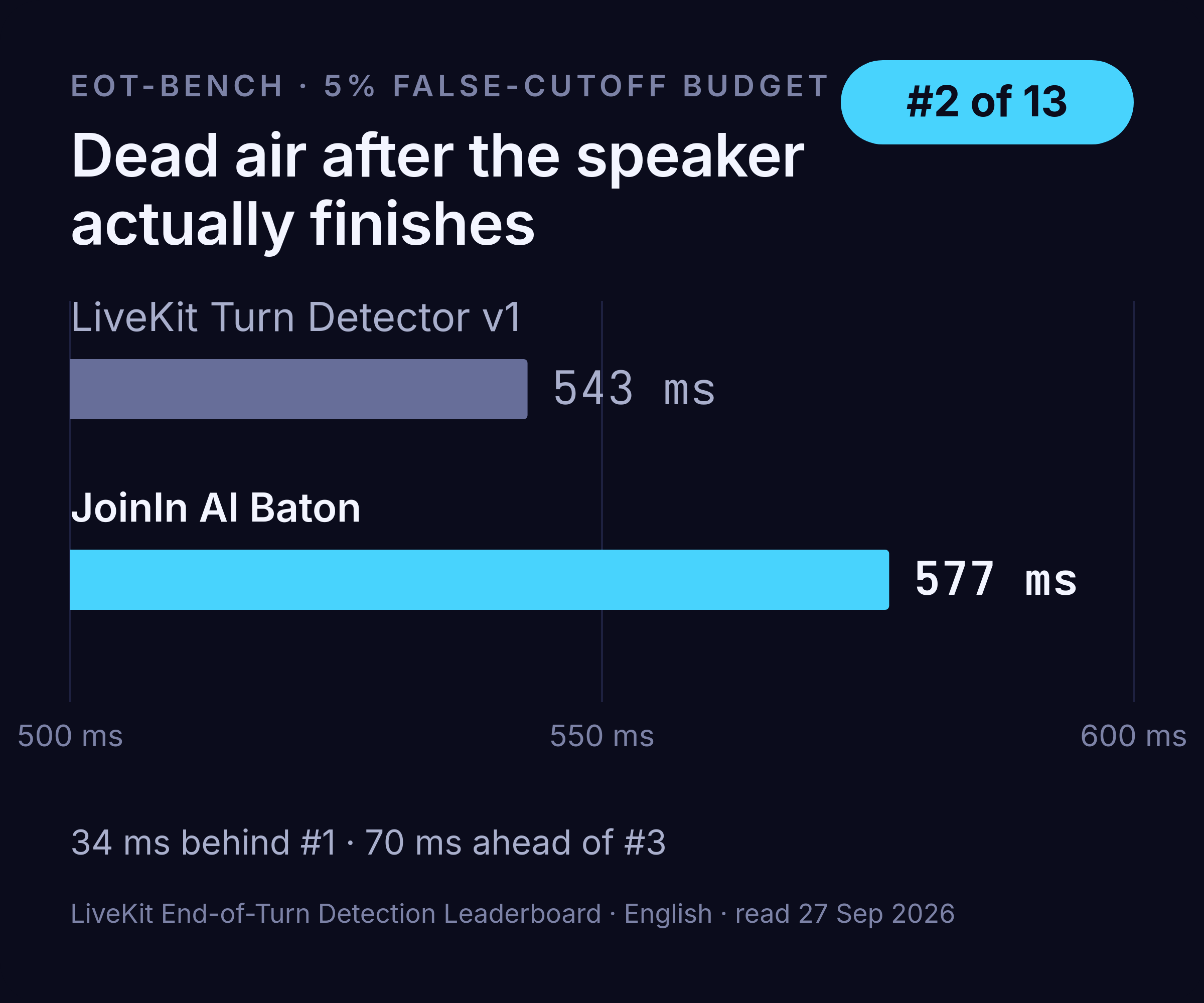
Baton Is #2 of 13 on LiveKit’s End-of-Turn Benchmark
A third party ran our turn-taking engine on their own harness and published the result: second of thirteen on both axes. A one-minute explainer on why end-of-turn detection matters, and why it matters even more in a room of four.
Read article →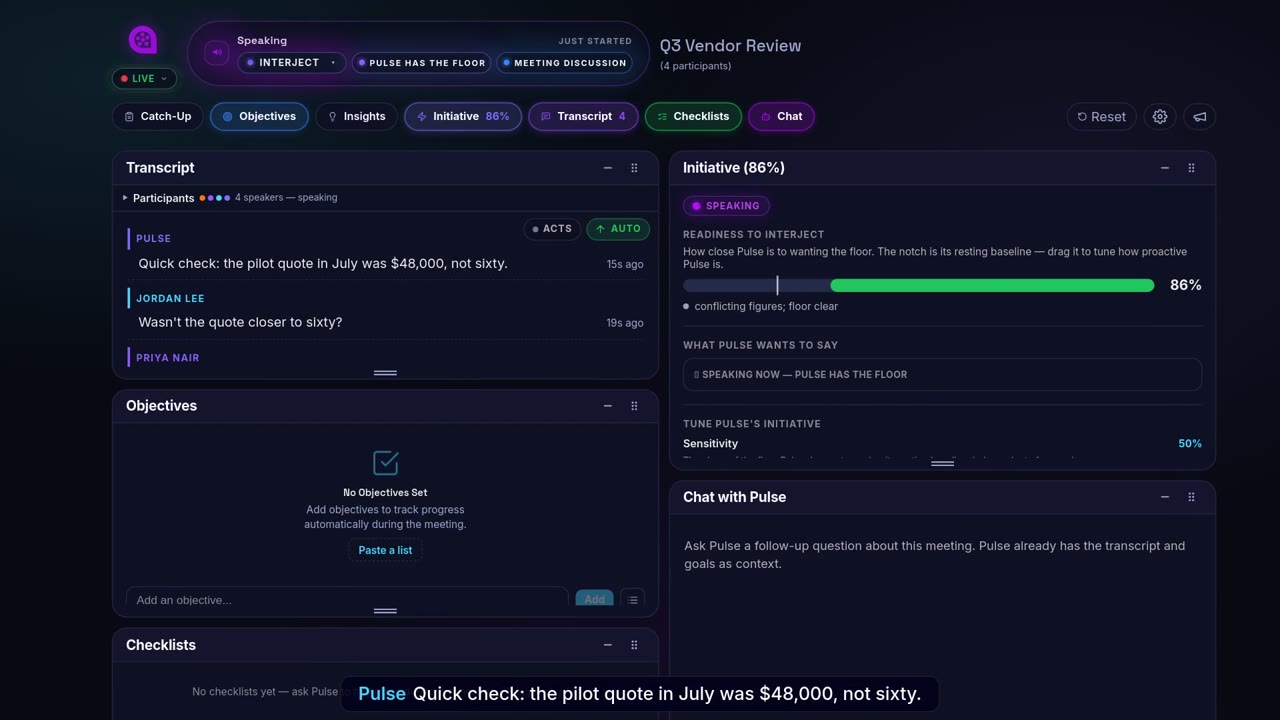
Meet Pulse: an AI That Participates in Your Meetings
Most AI meeting tools take notes. Pulse joins the conversation — it speaks when the room needs a number, tracks your objectives, turns commitments into tasks, and remembers between meetings. Thirty seconds of the real product, what “participates” actually means, and how to try the Pulse beta.
Read article →
Why We Built Baton
Frontier voice models give good answers with terrible timing. Baton is the turn-taking engine that decides when your AI speaks in a group — and when it stays silent. Why we built it, and why it is named after a relay hand-off.
Read article →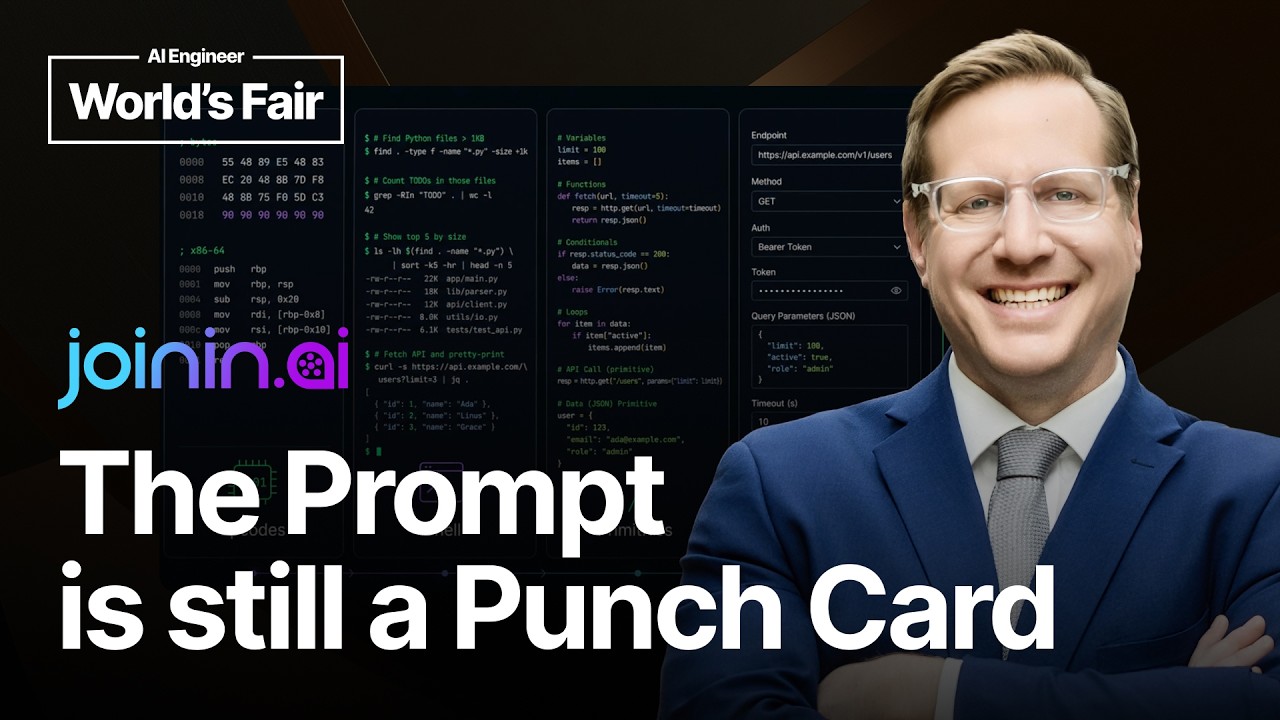
The Prompt Is Still a Punch Card
The intelligence felt radically new. The interface felt strangely old. AI should not just make software smarter — it should change the interface between humans and computers.
Read article →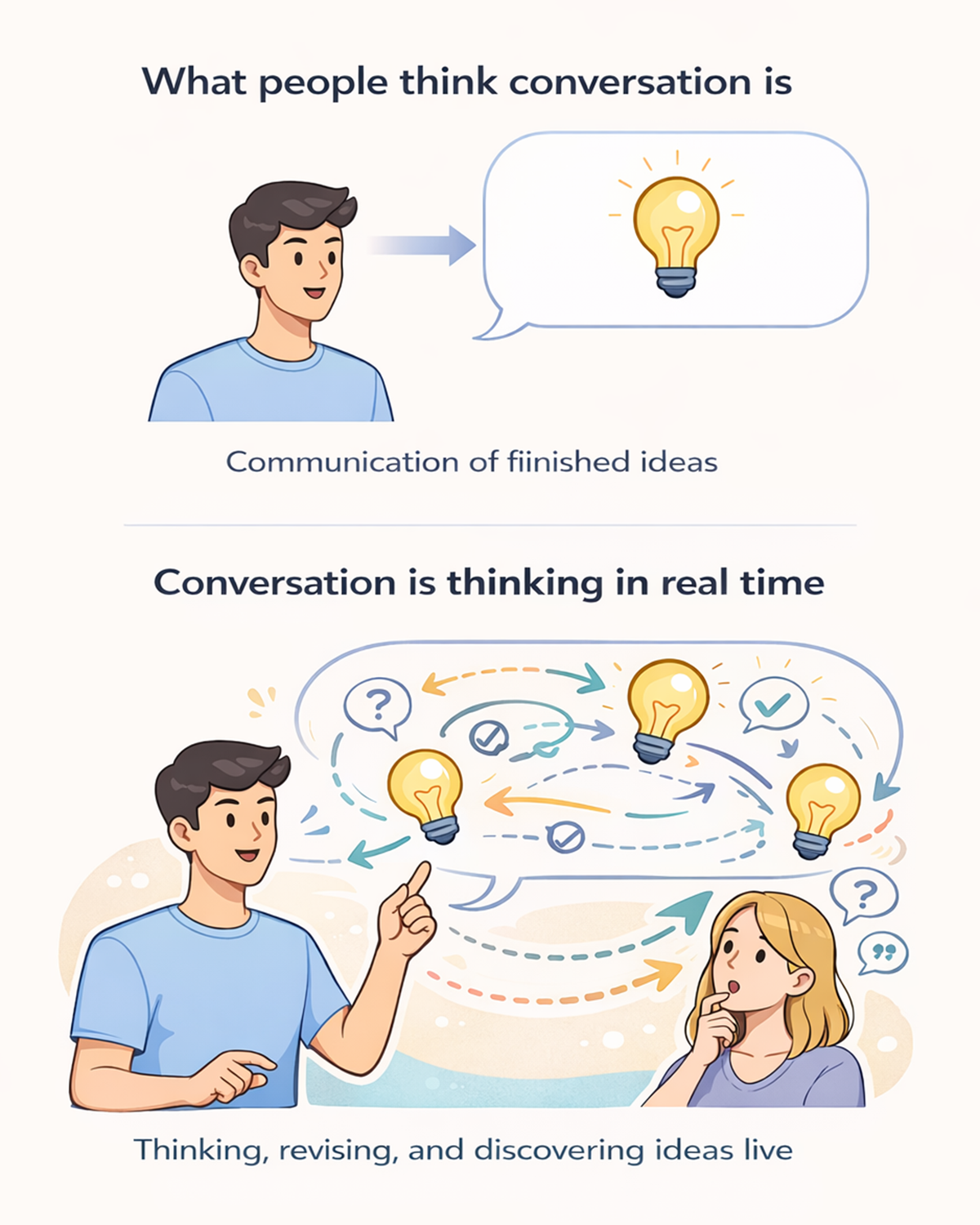
Conversation Is Thinking Output in Real Time
Humans do not simply communicate ideas through conversation. We discover them there. Conversation is thinking output in real time.
Read article →Founder Essay: Conversation is the Interface
Why we're building JoinIn.ai: The intelligence and power of AI is still stuck in prompt and response. Real human life happens in conversation—and that's the next interface AI must master.
Read article →
Our Vision for AI as a Meeting Participant
Imagine a world where you didn't have to think about how you had to interact with AI. Learn how JoinIn.ai is building conversation-native AI that participates in meetings like a teammate.
Read article →
AI Conversation Training Data
Exploring the importance of high-quality conversation data for training AI systems that can truly understand and participate in multi-speaker interactions.
Read article →